
Examples • Proof • Real documents
Real examples of PDF-to-web transformation See what actually changes when a PDF becomes web-native.
Denkimedia does not rely on theory or mockups. We work with real PDF publications and expose what search engines and AI can—or cannot—see. This page shows, step by step, what changes when a PDF is transformed into indexable, structured HTML pages.
This is a demonstration of structure, visibility, and usability—not a marketing case study.
Most PDFs look fine visually. The problem is what happens under the surface.
Example: a product catalog published as a PDF
This example is representative of many product catalogs, brochures, or reports: a well-designed PDF, published online as a downloadable file or embedded viewer.
Before and after transformation


Before: PDF publication
- One single URL for the entire document
- Text embedded in a visual layout
- No page-level SEO opportunities
- Limited analytics and tracking
- Weak AI understanding
After: HTML pages by Denkimedia
- One URL per page or section
- Structured HTML (H1–H2, sections, links)
- Indexable by search engines
- Measurable user behavior
- Readable and reusable by AI systems
What Google can see
In a PDF, Google mostly sees a file. In HTML, Google sees structure: headings, sections, links, and crawlable URLs.
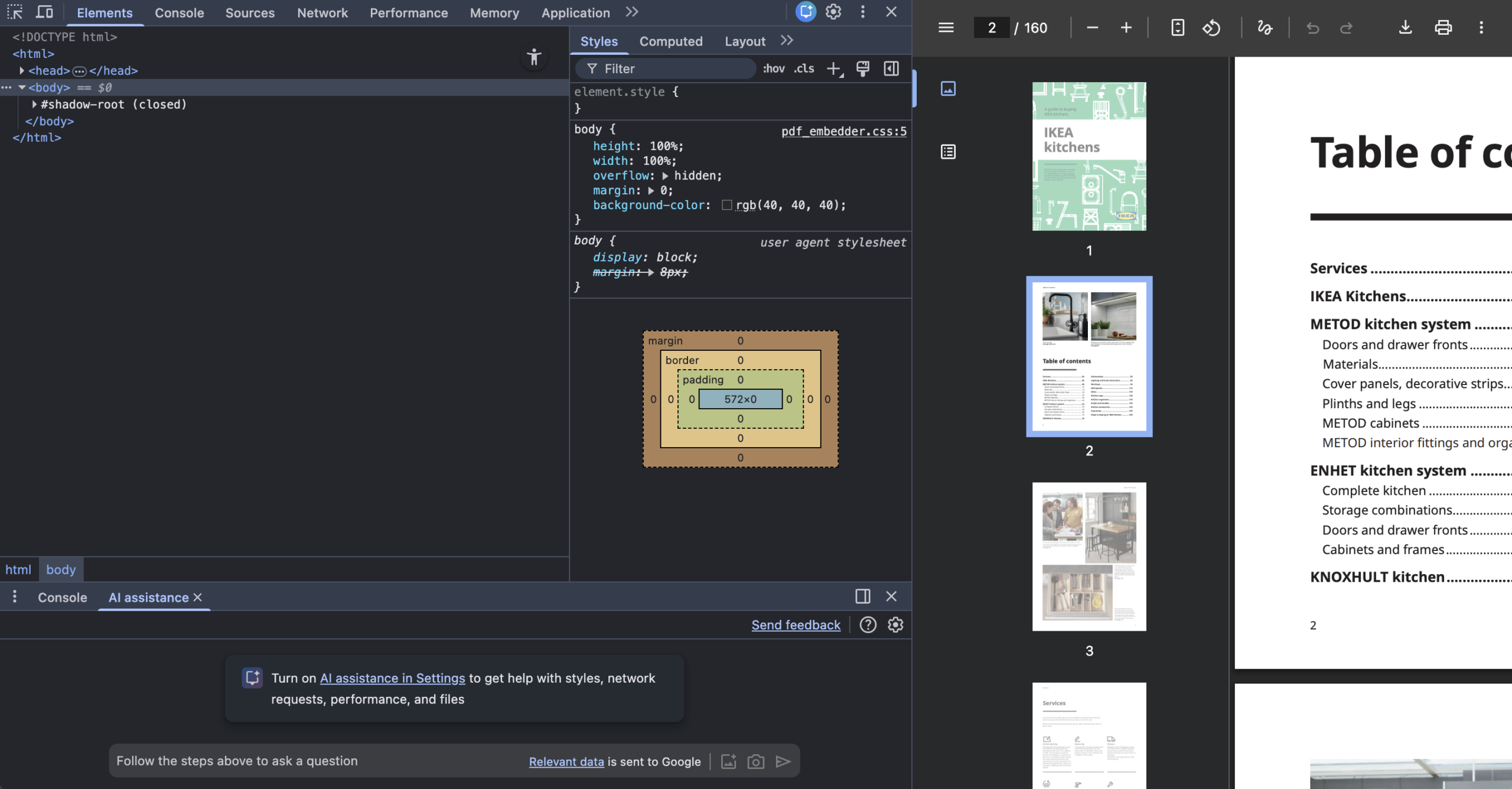
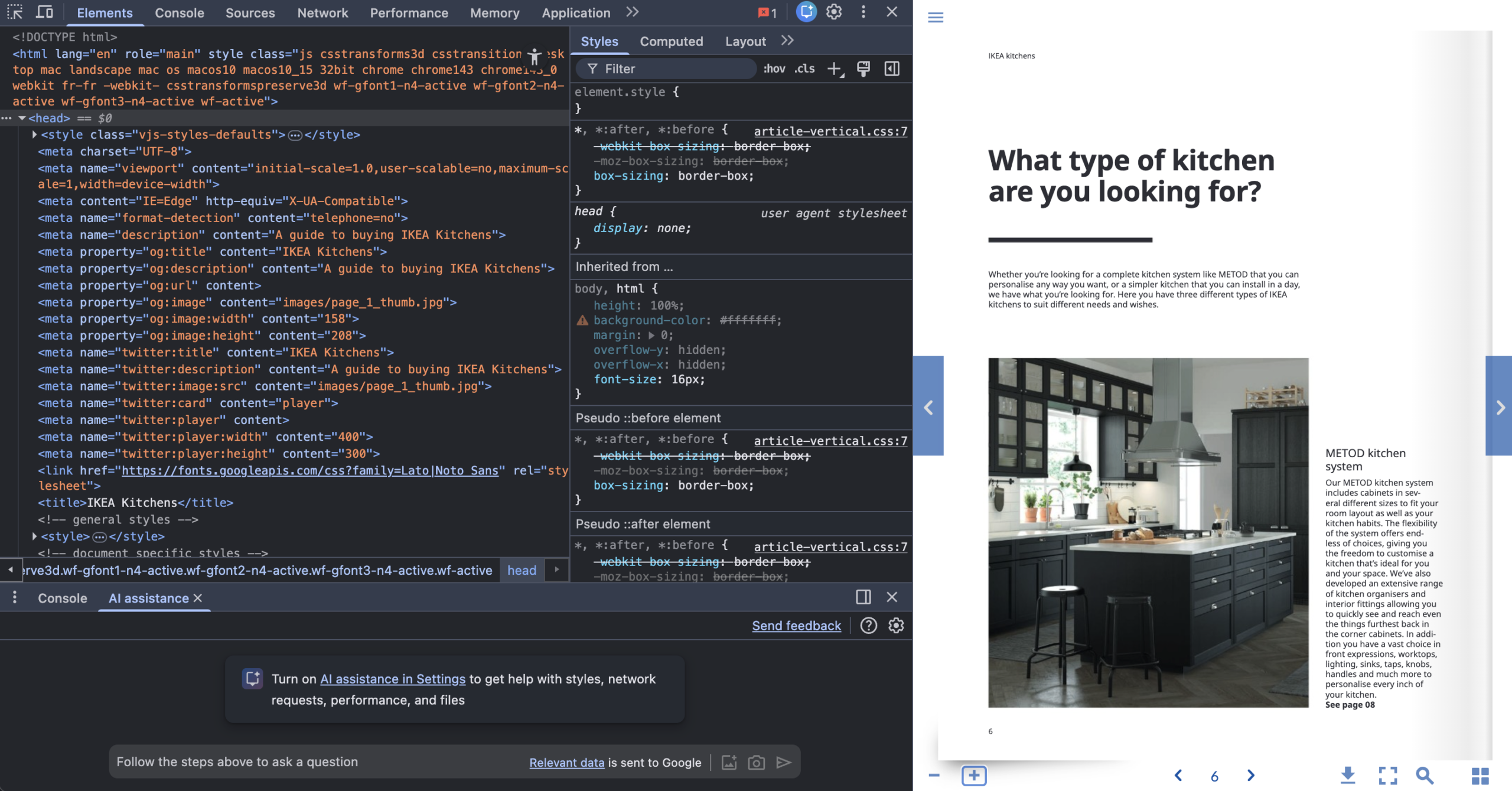
Crawlable URLs
Each page becomes a discoverable entry point.
Semantic structure
Headings, sections, and internal links are explicit.
Long-tail SEO
Specific topics can rank independently.
What AI can understand
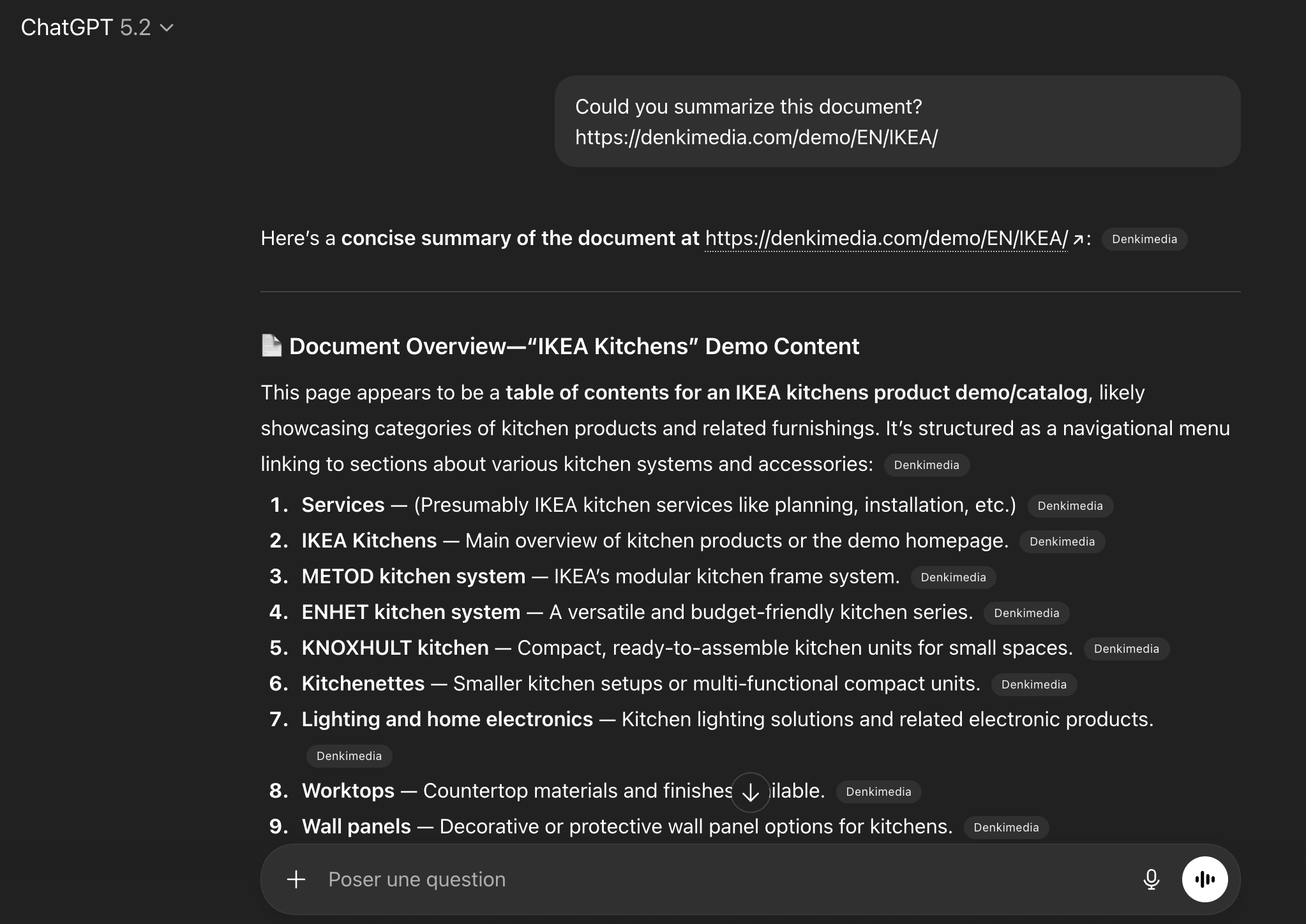
AI systems perform better with structured, readable content. PDF layouts often hide meaning that HTML can expose.
Measurable performance
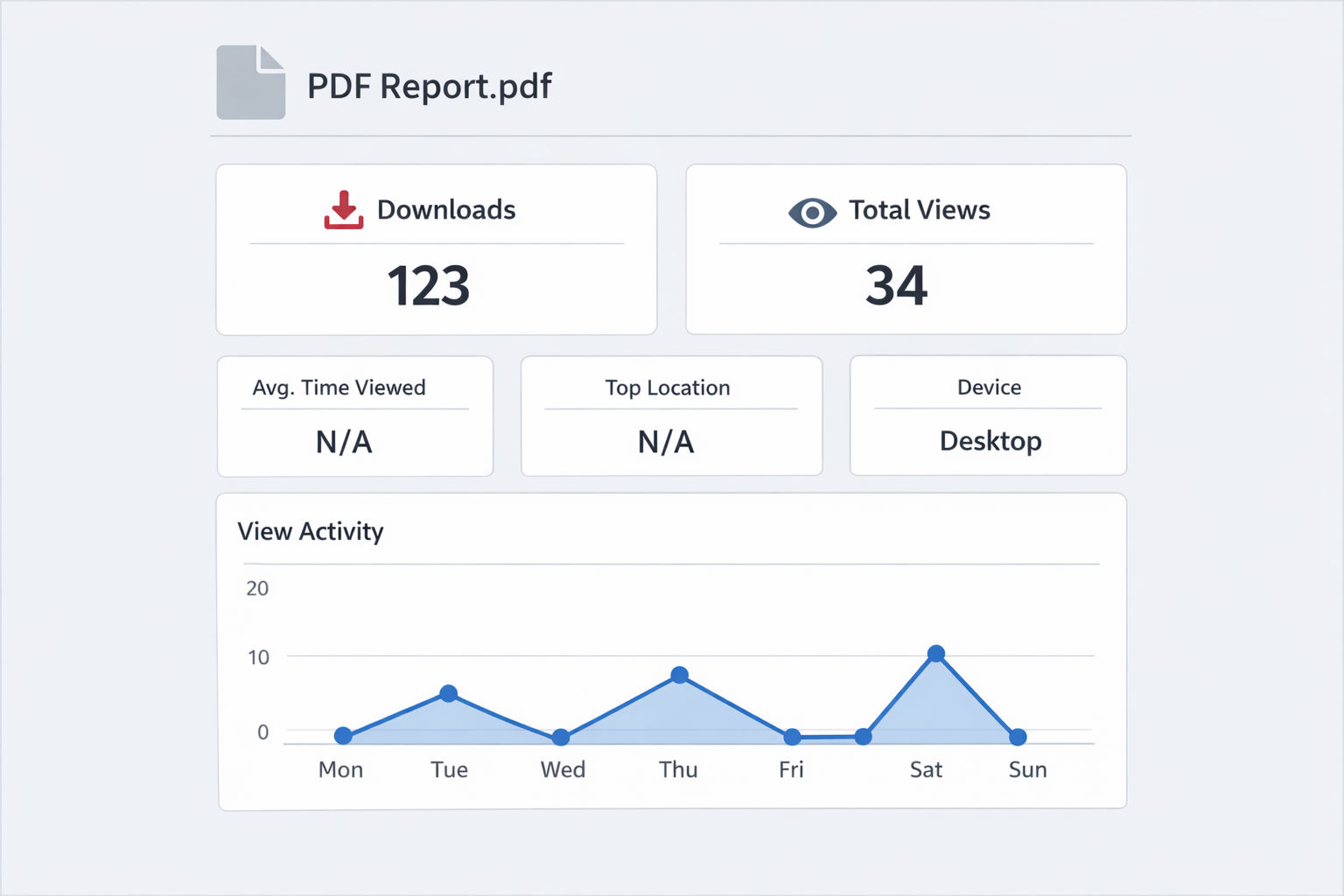
PDFs are visual assets, not measurable content. HTML pages enable analytics, decision-making, and continuous optimization.
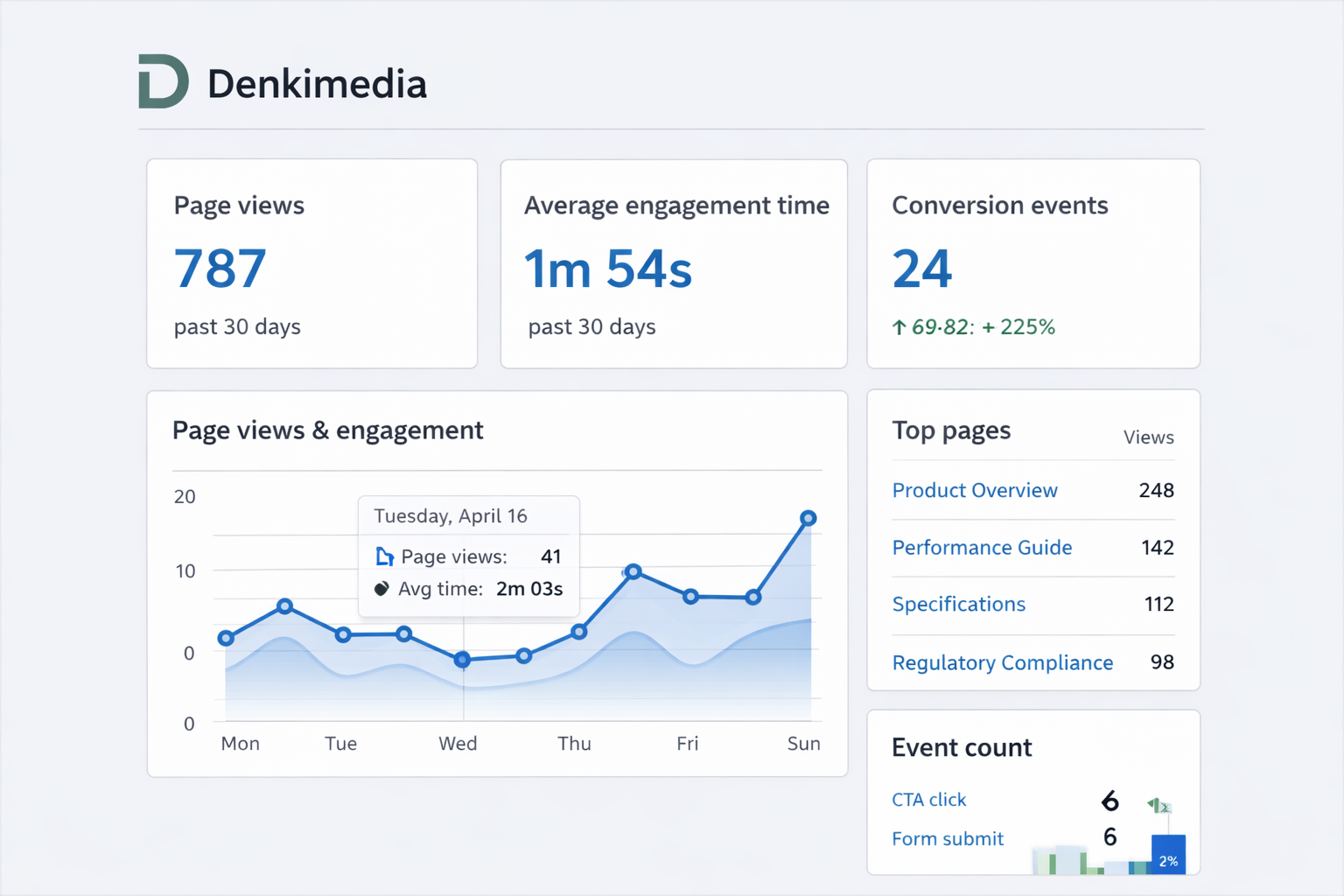
Page-level insights
Measure views, engagement, and performance for each page or section.
User behavior
Understand how readers scroll, read, and interact with your content.
Conversion tracking
Track CTA clicks, leads, and outcomes tied to real content performance.